Selective 16-Week Mentorship for College-Bound Baseball Players Ready to Separate Themselves—On and Off the Field
Up to 10 athletes accepted per session. Application required.
Designed for players pursuing every edge in performance—and the mindset to sustain it for life.
The Mental Foundations That Separate College-Bound Players
Develop Clutch-Level Composure.
Train the Craft of Inner Leadership
Elliminate Mental Barriers that Cap Performance
Limited to 10 Athletes | 16-Week Cohort | Start dates first Monday in August, December, and April
When Talent Is Equal,
the Mental Game Separates Players
Most college-Bound high school baseball players train mechanics relentlessly.
Very few train the mindset that determines composure, consistency, and leadership when it matters most and who they become when the game is on the line, Because the goal is not just success in the game—but strength, peace, and purpose beyond it.
A growing body of sport psychology research demonstrates that structured psychological skills training enhances performance consistency, improves stress regulation and resilience, and contributes to stronger coach-rated leadership behaviors.
College Track Baseball was built to apply that research systematically.
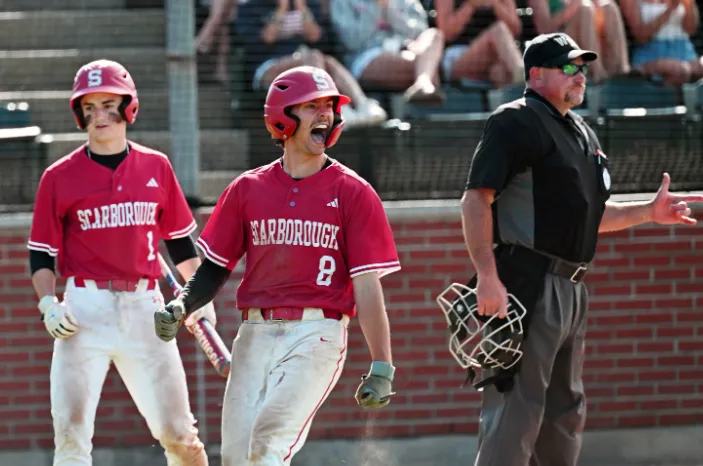
Why Serious Baseball Players Plateau — Even With Talent
Key Insight: Showcases, travel tournaments, and scout-heavy environments amplify stress. Without structured regulation skills, performance fluctuates — even when ability is high.
Research: Studies show that athletes who lack structured stress-management strategies experience decreased performance stability and higher burnout risk (Fletcher & Sarkar, 2012; Gustafsson et al., 2011).
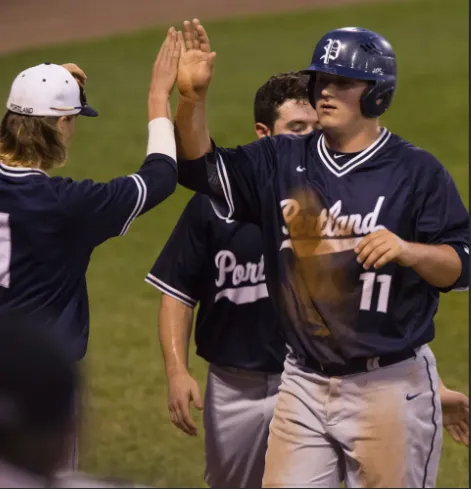
No Structured Mental Skills System
(Mindset Development):Key Insight: Most players develop physical skills without structured training in emotional regulation, attentional control, resilience, and confidence recovery.
Research: Meta-analyses show that psychological skills training produces moderate-to-large positive effects on athletic performance (Brown, Fletcher, & Henry, 2015).
Yet it remains underdeveloped at the high school level
Identity Statistics and Metrics:
Key Insight: When confidence rises and falls with batting average, ERA, OPS, exit velo, launch angle, spin rate, MPH composure becomes fragile.
Research: Elite performers demonstrate identity stability and emotional control independent of short-term results (Jones, Hanton, & Connaughton, 2007).
These skills can be developed.
Overtraining without Psychological Recovery:
Key Insight: Mental fatigue reduces decision-making sharpness, leadership presence, and competitive poise.
Research: Structured resilience training improves recovery between setbacks and enhances long-term performance sustainability (Fletcher & Sarkar, 2012).
Applied Mental Performance — Built for the Game.
This is structured mental performance and identity development applied to serious baseball players preparing for the demands of college recruitment. Participants complete structured pre- and post-assessments, engage in guided identity and composure training, and develop systems that transfer directly into game situations.
Research & Methodological Foundations
Brown, D. J., Fletcher, D., & Henry, I. (2015). A meta-analysis of psychological and psychosocial interventions in sport. Sport, Exercise, and Performance Psychology, 4(2), 136–157.
Fletcher, D., & Sarkar, M. (2012). A grounded theory of psychological resilience in Olympic champions. Psychology of Sport and Exercise, 13(5), 669–678.
Gustafsson, H., Hassmén, P., & Hassmén, N. (2011). Are athletes burning out with perfectionism? Journal of Sport and Exercise Psychology, 33(2), 268–298.
Jones, G., Hanton, S., & Connaughton, D. (2007). A framework of mental toughness in the world’s best performers. The Sport Psychologist, 21(2), 243–264.

The Mental & Leadership Advantages That Separate College Recruits
Composure Under Pressure
Confidence That Holds
Rapid Emotional Reset
Leadership That Gets Noticed
Mental Performance Structure
At the Highest Level, Skill Converges. Mindset Separates.
Velocity is high. Mechanics are refined. Analytics are precise. The gap is no longer physical. It is mental.
In a conversation with former MLB shortstop Mike Bordick — who still holds the Major League record for consecutive chances and games without an error — I asked what separates players at the highest level.
His answer was simple.
“It’s how they go about doing their job.” In other words — mindset.
When skill levels rise, emotional consistency becomes the differentiator. Body language after failure. Decision-making under pressure. Composure when momentum shifts. Those are internal skills.
And they are trainable.
At the Highest Level, Skill Converges. Mindset Separates.
No other sport exposes a young man like baseball.
You fail publicly. You stand alone. There is no clock. You do not lose until the final out.
Baseball reveals identity. If failure is processed correctly, it builds resilience. If it is not, it builds hesitation.
Most players train their swing. Very few train their response. That is the separation.
And that is what we train.
Where Mental Mastery Meets competitive separation.
Performance-Driven Structure
Most mindset training focuses on motivation and surface-level techniques.
College Track Baseball is built on a structured system that develops composure, emotional regulation, identity stability, and leadership under pressure.
Every concept is organized into a repeatable performance framework — not a one-time emotional lift.
Applied Mental Systems
Players do not just learn ideas.
They build systems.
Pre-game preparation routines.
In-game emotional reset protocols.
Post-performance reflection structures.
Pressure response patterns.
These systems are practiced deliberately so they become automatic when the game speeds up.
Intentional Athlete Development
This cohort is limited to 10 serious players pursuing college baseball.
The environment is focused, accountable, and growth-driven.
Baseball becomes the proving ground.
Character becomes the outcome.
PROGRAM STRUCTURE
AND PERFORMANCE SUPPORT
PERFORMANCE ASSESSMENT & GUIDED REFLECTION
Players complete structured self-evaluations focusedon composure, recovery speed, leadership presence, and performance consistency. This is not journaling for self-expression — it is targeted performance awareness designed to improve decision-making under pressure.
MENTAL PERFORMANCE TOOLS
Athletes are introduced to practical tools for:
• Emotional reset between at-bats
• Pre-game preparation
• Focus control
• Pressure response
• State regulation
These are practiced, not discussed.
COHORT ACCOUNTABILITY
Athletes develop alongside a small cohort of serious players pursuing college baseball. The shared standard elevates accountability, leadership presence, and competitive maturity.
Parents are encouraged to engage in the process as active partners. When alignment exists at home, growth accelerates — and both athlete and parent deepen in emotional awareness, communication, and resilience.
This structure produces measurable performance gains and strengthens the foundation that supports long-term development — on and off the field.
foundational Mental Performance Curriculum
College Track Baseball is built around a structured on-demand mental performance curriculum. Athletes work through guided lessons designed to reshape thinking patterns, strengthen belief structures, and develop the internal stability that drives composure and leadership.
Live coaching sessions reinforce and apply these principles, ensuring consistent transfer into competitive environments.
DEEP PRACTICE & APPLICATION
Mental skills do not develop through exposure. They develop through repetition.
Athletes are guided in structured deep practice — applying each tool in controlled scenarios so that composure, focus, and leadership behaviors become automatic under pressure.
Performance is trained deliberately, not left to chance.
Advanced Mindset Performance Leadership
Coach Chuck is Certified in:
• Advanced Behavioral Modeling
• Neuro-Linguistic Programming
• Time Line Therapy techniques
• Hypnotherapy
This program integrates those disciplines into a structured mental performance system designed specifically for competitive athletes.
MEET YOUR COACH
COACH CHUCK BARNARD
The #1 Champion’s Mindset Mentor Empowering Athletes to Compete with Composure, Confidence, and Character
I created this mental performance system after witnessing how structured mindset development transforms athletes under pressure. Over three decades as an educator and coach, I observed a consistent pattern: talent alone does not determine who thrives at the next level.
Much of this work was forged in classrooms and competitive environments where students — including those with diagnosed learning and attention challenges — learned to build focus, discipline, and identity stability that transferred directly into performance.
As a certified mental wellness coach and diplomate with the American Institute of Stress, I integrate research-backed mental skills training with practical systems designed for competitive athletes preparing for higher levels of play.

This certification empowers coaches to guide others in improving their mental wellness through a holistic approach that integrates mind-body strategies.

Diplomats engage in public speaking, workshops, and partnerships to further AIS's goals and share effective stress-reduction strategies.
Listen to what others have to say about
COACH CHUCK BARNARD
The #1 Champion's Mindset Mentor
Mark, Former College Pitcher
"I would not have played 3 years of professional baseball if those sessions did not happen"

Charlie, Former College Pitcher
"Doctors told me I wouldn't likely be able to play varsity sports high school let alone college..."
Billy, Former College Short Stop
"Mindset training was the sole reason I was able to play baseball after high school"
WHY cOLLEGE-TRACK BASEBALL IS DIFFERENT?

APPLIED MENTAL SYSTEMS
Players develop structured systems for composure, emotional reset, leadership presence, and pre-game preparation. This is not inspiration. It is repeatable performance structure.

pERFORMANCE DRIVEN STRUCTURE
Built from over three decades working with competitive athletes, this system integrates research-backed mental performance training with practical application specific to high school baseball. Every session is designed to translate directly into game situations.

INTENTIONAL ATHLETE DEVELOPMENT
This cohort is limited to 10 serious players pursuing college baseball. The environment is focused, accountable, and designed for athletes committed to growth — not casual participation.
fAQ's
FREQUENTLY ASKED QUESTIONS
Who is this program for?
College Track Baseball is designed for serious high school players (typically 14–18) who are actively pursuing college baseball and are willing to commit to structured mental performance development.
This is not a casual confidence class. It is a focused system for athletes preparing for recruiting-level pressure.
My son is already talented. Why would he need this?
At the college level, talent is assumed. What separates recruits is:
• Body language after failure
• Emotional stability
• Coachability
• Consistency under scrutiny
• Leadership presence
These traits are trainable. College Track Baseball focuses on developing them systematically.
Is this recruiting advice or placement services?
No.
This program does not provide recruiting outreach or placement services.
It develops the mental structure — composure, leadership, consistency, emotional regulation — that college coaches consistently evaluate during showcases, travel tournaments, and communication.
How is this different from team coaching?
Most team environments focus primarily on physical development and strategy.
Very few provide structured, repeatable mental performance systems that athletes can apply independently under pressure.
This program fills that gap.
What is the time commitment?
Athletes participate in structured weekly sessions and complete guided application exercises between sessions.
The program is designed to integrate into training schedules — not compete with them. Specific session times will be provided upon acceptance into the Founding Class.
Is parent involvement required?
Yes.
At least one parent must attend the initial orientation session.
Alignment between athlete and parent significantly increases outcomes.
What makes this a “Founding Class”?
This is the first formally documented College Track Baseball cohort.
Participants will complete structured pre- and post-assessments to measure growth in composure, confidence stability, and leadership behaviors.
How many athletes are accepted?
The Founding Class is limited to 10 athletes to ensure focused attention and accountability.
Why are you formally documenting this now?
For over three decades, Coach Chuck implemented these mindset principles in classrooms and athletic settings where outcomes were visible but not formally measured or published. Much of the impact occurred through direct mentorship and word-of-mouth referrals.
At this stage, the goal is to bring structure, measurement, and documentation to a system that has already proven effective in extensive practice. The Founding Cohort allows for intentional data collection, refinement, and clarity — ensuring the program meets the demands of serious college-bound athletes.
This is not a new concept. It is a structured evolution of work that has been tested in real environments for years.
What is the financial commitment?
The complete Mindset Transformation framework that informs College Track Baseball is structured as a high-touch mentorship experience valued at $7,500 when delivered privately to families.
The Founding Cohort investment is only $750.
This inaugural cohort allows for structured documentation of measurable performance outcomes within a baseball-specific environment prior to broader expansion.
Future cohorts will reflect full market value.
Baseball Will Expose Him. This Program Will Prepare Him.
Copyright © 2026 - Athletic Mastery Accelerator College Track Baseball Mentorship